In the fast-paced world of artificial intelligence, HuggingChat stood out as one of the most promising open-source alternatives to ChatGPT. Launched by Hugging Face in April 2023, it quickly gained traction among developers, researchers, and everyday users seeking a transparent, customizable, and free AI chatbot experience. As we reach December 2025, the landscape has shifted dramatically with the official shutdown of the public HuggingChat service in July 2025. This in-depth HuggingChat review 2025 explores its history, key features, performance during its active years, reasons for closure, and the best alternatives available today. Whether you’re a long-time user mourning its loss or a newcomer curious about open-source AI chatbots, this guide covers everything you need to know.
What Was HuggingChat? An Overview of the Platform
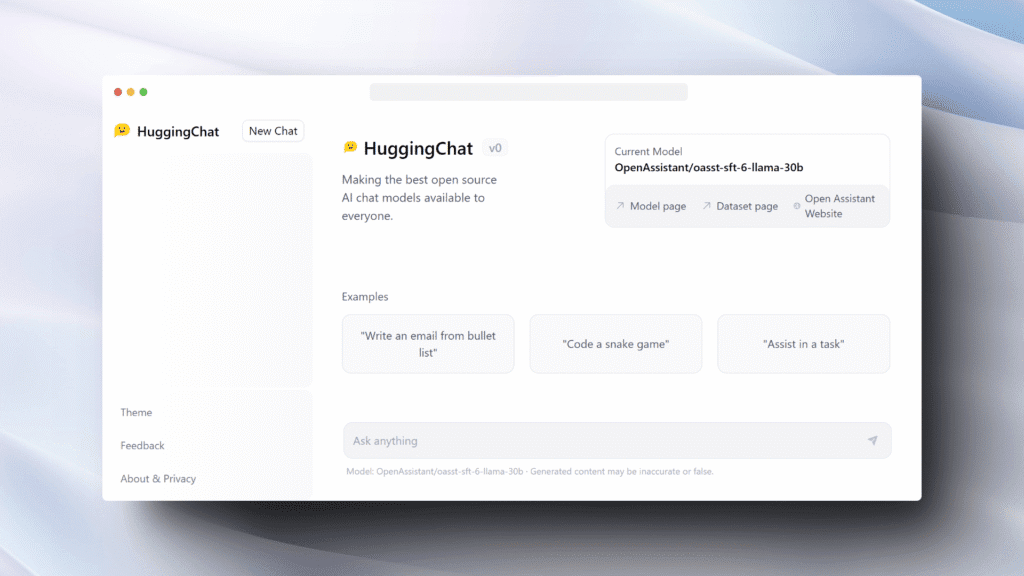
HuggingChat was an innovative web-based AI chatbot developed by Hugging Face, the renowned hub for open-source machine learning models. It served as a direct competitor to proprietary tools like OpenAI’s ChatGPT, Google Gemini, and Anthropic’s Claude, but with a strong emphasis on openness and community-driven development.
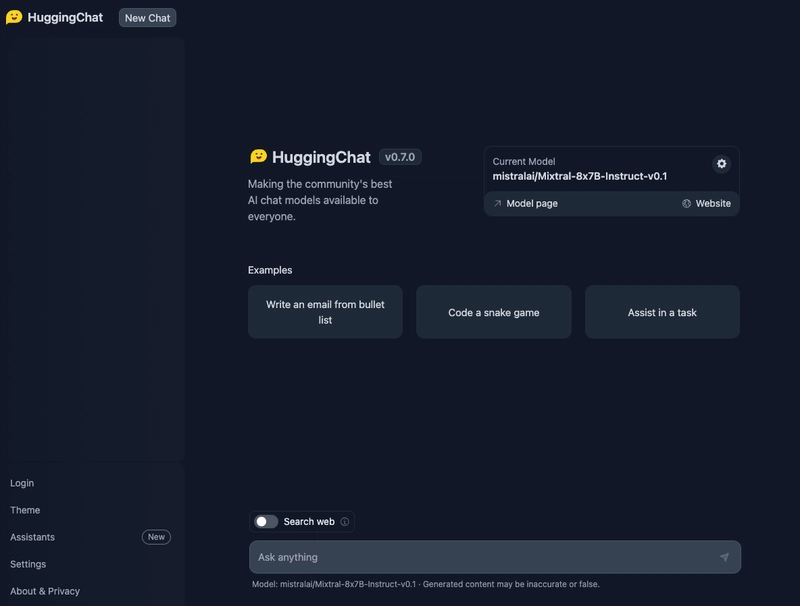
At its core, HuggingChat allowed users to interact with a wide array of leading open-source large language models (LLMs) through a single, user-friendly interface. Popular models included Meta’s Llama series, Mistral AI’s offerings, Google’s Gemma, and community favorites like Command R+ from Cohere. Users could easily switch between models to suit specific tasks—choosing a faster one for quick queries or a more advanced one for complex reasoning.
Key historical features that made HuggingChat unique:
- Multi-Model Support: Access to dozens of state-of-the-art open-source LLMs, often updated frequently with the latest community releases.
- Web Search Integration: Real-time access to current information via built-in search tools.
- Tool Usage: Support for assistants that could perform actions like code execution, image analysis, and more in later iterations.
- Custom Assistants: Users could create and share personalized bots powered by specific models.
- Privacy and Transparency: No heavy censorship in many models, clear disclaimers about potential inaccuracies, and fully open-source code for the chat UI.
HuggingChat was completely free, required minimal or no sign-up for basic use, and boasted an ad-free experience. It attracted over 1 million users and powered more than 100,000 custom assistants during its run, highlighting the demand for open and customizable AI.
HuggingChat’s Current Status in Late 2025: The Shutdown Explained
As of December 2025, the public version of HuggingChat at huggingface.co/chat is no longer operational in its original form. In July 2025, Hugging Face CTO Julien Chaumond announced the bittersweet decision to close the standalone HuggingChat app. Described as an “experimental testbed,” the platform had fulfilled its purpose after 27 months of operation.
The closure was not due to a lack of popularity but rather a strategic shift. Hugging Face aimed to integrate chat functionalities more deeply into their broader ecosystem, including Spaces (for hosting apps), Inference Endpoints (for scalable model deployment), and enterprise solutions. The team expressed pride in HuggingChat’s achievements: hosting over 20 open-source models, advancing inference technologies (contributing to projects like vLLM and llama.cpp), and gathering valuable insights into user interactions and multi-model systems.
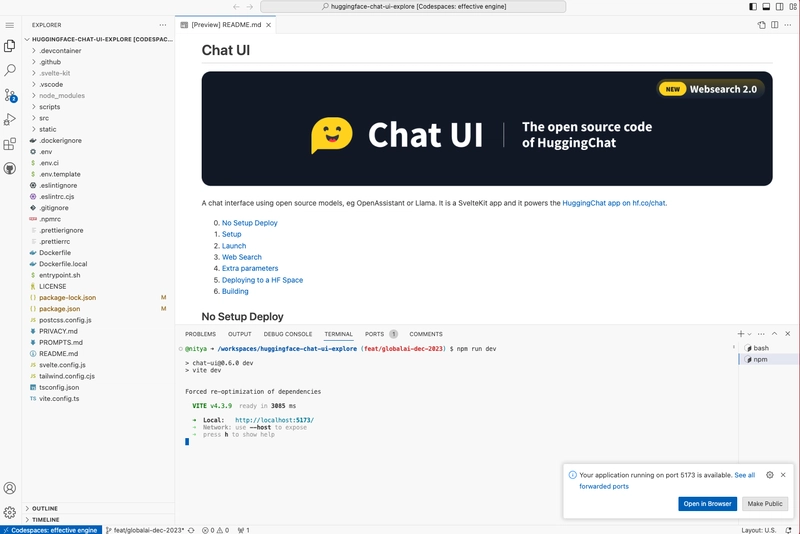
While the public app is shut down, the open-source spirit lives on. The chat-ui repository on GitHub remains available, allowing developers to self-host instances or fork the code for custom deployments. Many community members continue to run private versions using tools like Ollama for local models.
This move reflects the maturing AI industry, where companies like Hugging Face focus on infrastructure and developer tools rather than consumer-facing chat apps.
In-Depth Features Review: What Made HuggingChat Stand Out
During its active period (2023-2025), HuggingChat earned praise for several standout features that set it apart in the crowded AI chatbot market.
Model Variety and Customization
One of HuggingChat’s biggest strengths was its model-switching capability. Users could compare responses from different LLMs side-by-side, making it an excellent tool for researchers and educators teaching about AI variations. Models ranged from lightweight ones for speed to heavyweight reasoning powerhouses.
Performance and Capabilities
- Text Generation: Excellent for creative writing, email drafting, and general Q&A.
- Coding Assistance: Strong support for programming tasks, debugging, and even generating full scripts.
- Multimodal Features: Later updates added image upload and analysis in select models.
- Uncensored Options: Many open models had fewer content restrictions, appealing to users frustrated with proprietary guardrails.
However, performance varied by model—some were blazing fast, while others lagged during peak times.
User Interface and Experience
The interface mirrored ChatGPT’s simplicity: a clean chat window, conversation history, and easy model selection. It supported markdown formatting, code blocks, and sharing conversations.
Privacy and Ethics
As an open-source project, HuggingChat prioritized user privacy with no mandatory data collection for training. It also promoted ethical AI by making model weights and code publicly available.
Pros and Cons of HuggingChat: A Balanced Perspective
Pros
- Completely Free and Unlimited: No subscription tiers or usage quotas.
- Open-Source Transparency: Full access to code and models, fostering trust and community contributions.
- Diverse Model Ecosystem: Best-in-class open LLMs, often less biased or censored.
- Educational Value: Ideal for learning about AI differences and experimentation.
- Developer Tools: API integrations and self-hosting options.
Cons
- Inconsistent Reliability: Occasional outages, slow responses, and model-specific quirks.
- Variable Quality: Some models underperformed compared to top proprietary ones like GPT-4o.
- Limited Multimodal Support: Trailed behind competitors in native image/video handling.
- No Mobile App: Primarily web-based, with a less optimized mobile experience.
- Post-Shutdown Accessibility: Now requires technical setup for continued use.
Overall, HuggingChat scored high (around 4.5/5 in user reviews) for openness but lower on polish compared to paid alternatives.
HuggingChat vs Competitors: Head-to-Head Comparisons in 2025
HuggingChat vs ChatGPT
ChatGPT (now powered by GPT-4o and o1 models) remains the gold standard for consistency, speed, and advanced features like voice mode and image generation. HuggingChat excelled in customization and ethics but couldn’t match OpenAI’s refinement.
HuggingChat vs Claude
Anthropic’s Claude emphasized safety and long-context reasoning. HuggingChat offered more model variety but less built-in alignment.
HuggingChat vs Google Gemini
Gemini integrated seamlessly with Google services and excelled in multimodal tasks. HuggingChat was stronger for privacy-focused users.
HuggingChat vs Other Open-Source Options
It was the most accessible public open-source chatbot until its closure, outperforming fragmented self-hosted setups in ease of use.
Best HuggingChat Alternatives in 2025: Top Recommendations
With HuggingChat’s public service gone, here are the leading alternatives for similar experiences:
- GroqChat: Lightning-fast inference with open models like Llama 3. Extremely quick responses.
- Perplexity AI: Search-focused chatbot with citations; great for research.
- Mistral’s Le Chat: Official chatbot from Mistral AI, featuring their latest models.
- Claude by Anthropic: Best for deep reasoning and ethical AI.
- Google Gemini: Multimodal powerhouse integrated with the Google ecosystem.
- Self-Hosted Solutions:
- LibreChat or Open WebUI: Open-source UIs similar to HuggingChat’s chat UI.
- Ollama + AnythingLLM: Run local models on your hardware for ultimate privacy.
- LM Studio: Desktop app for easy local AI chatting.
For developers, Hugging Face’s platform still shines for hosting custom chat apps via Spaces.
How to Get Started with HuggingChat-Like Experiences Today
If you miss HuggingChat:
- Visit Hugging Face Spaces for community-hosted chat demos.
- Clone the chat-ui repo and deploy with Docker.
- Try Ollama: Download models locally and pair with a web UI.
Final Verdict: Is HuggingChat Still Worth It in 2025?
HuggingChat was a pioneering force in democratizing open-source AI, proving that community models could rival proprietary giants. Its 2025 shutdown marks the end of an era, but its impact endures through improved inference tech and inspired alternatives.
For casual users, switch to polished options like ChatGPT or Gemini. Developers and privacy enthusiasts should explore self-hosted forks—the open-source legacy ensures HuggingChat’s spirit lives on.
In a world increasingly dominated by closed AI systems, HuggingChat reminded us of the power of openness. As we move into 2026, the demand for transparent AI will only grow.